Showing posts with label Forensic. Show all posts

Wednesday, February 24, 2010

Funny XRays


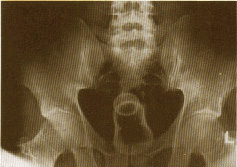
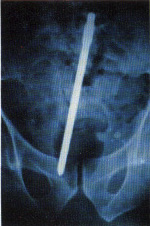
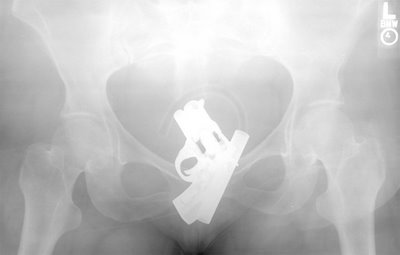
Here are some pretty funny x-rays of people that either swallowed something they shouldn't, put something up somewhere they shouldn't, or have something stuck in their body I don't want in mine. Even though some look fake, all these X-rays are REAL.


We'll start with the most famous. The old smuggle the phone to your boyfriend in prison in your ....


Impulse Body Spray up the rear. I think it works better when
you don't shove it up the butt. Next to it a boring photo of a stuck sexual device.

Oops, I've got a pepper shaker in my bum. Pass the salt.

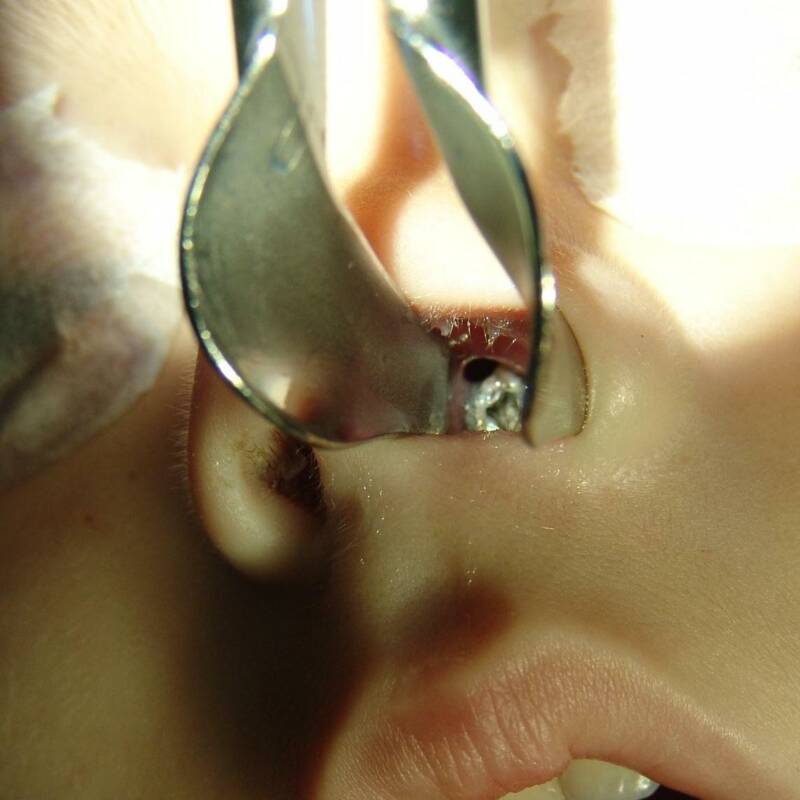
I think I found the grommet that's always missing on my tarp. It's
up this boys' nose.

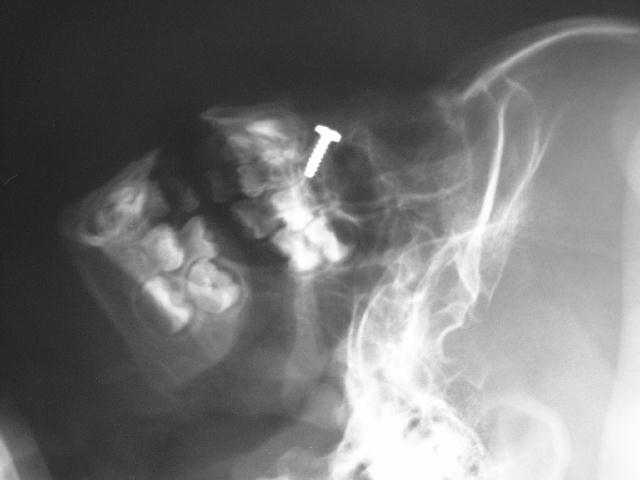
The old screw stuck up the nose. Actual photo below

Professor Plum with the screwdriver in the bum


I've heard of getting shot in the bum but this is the first case of shoving the whole bullet up your butt. Yes this is real

Again the famous, Coke bottle up the rear. And now for my
trick called "The Two Litre"


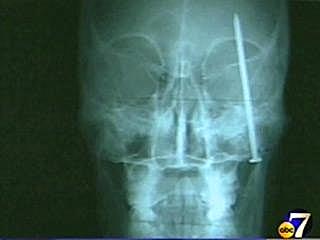
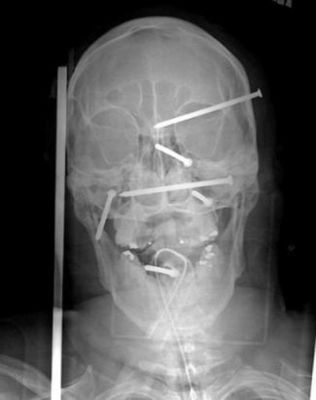
The first nail in the head picture. He survived but my question is
who uses nails that long?

That must have been one meal. Somebody actually
ate the fork as well.


You would be surprised how many kids swallow safety pins.
Even more surprising, many of them are swallowed open like
this one.

This guy actually went months before discovering his pain was this nail.

Anything for my man. I call this one "Heat hidden in the meat"

Cool x-ray of a sword swallower

Here's a nice close up of that screw. OUCH


X-ray of what happens when a nail gun goes off in your face.


Sunday, August 30, 2009

DNA Extraction

DNA Extraction is typically the first step in a longer laboratory process. DNA first needs to be purified away from proteins and other cellular contaminants.

So Where do we begin?

We first need to collect cell from the test subject. The skin inside of our mouths losses thousands of cells everyday. These cells are ideal for DNA Extraction. Once the “Cheek Cells” are collected you will need to place the swab used for collection in a Eppendorf Tube

Now using a Micropipette, add Lysis a solution with the greek meaning “to separate” into the Eppendorf tube containing the swap used to collect the cheek cells. Once the Lysis has been added you will need to place the tube in a “Warm Water Bath Machine”.
The Lysis solution we just added contains two important ingredients, the first being “Detergent” and the second being “Proteinase K”. The Detergent disrupts the cel membrane and nucleus envelope. Causing the cells to burst open and release their DNA. The DNA is still wrapped very tightly around proteins called histones, and the Proteinase K cuts apart the histones to free the DNA.

The cells have now been in warm water long enough (the cells themselves are not in warm water but merely the Eppendorf tube is) for the DNA freed from the cells, and we have removed the swab from the tube.

Now we must add concentrated salt to the Eppendorf tube containing the DNA. The salt causes the proteins and the cellular debris to clump together. To complete this process we must now place the Eppendorf tube into a centrifuge. In order the balance the centrifuge we have to add a second Eppendorf tube into it that contains only water on the opposite side of the tube containing the DNA sample.DNA extraction4.gif (23962 bytes)

Inside the centrifuge, the tube spin a high speed. The heavy clumps and cellular debris sink to the bottom of the tube, while the DNA strands stays distributed in the liquid above .

Now using a Micropipette we must very carefully remove the liquid above (which contains DNA) the debris and cellular contaminants and place it into a new clean Eppendorf tube, the debris and cellular contaminants will be left behind since they are no longer needed.

Now we will need to add Isopropyl into the Eppendorf tube containing the DNA strands, Inverting the tube several times mixes the Isopropyl alcohol into the DNA solution. Because DNA is not soluble, in Isopropyl alcohol it comes out of the solution. We will then be able to see the DNA with your naked eye.

Again we will have to place the tube into a centrifuge. This time after the sample spins in the centrifuge, the DNA sinks to the bottom of the Eppendorf tube.

Now what’s next? Nothing. The solution left in the tube is the final part of the DNA extraction. Depending on the circumstances you may want to let the solution dry out so it could be frozen for later use, for years even. This can now be used in another forensic laboratory investigation to match that DNA with other DNA found at a crime scene for example.

Asphyxia


Asphyxia occurs when the body is deprived of oxygen that arises from being unable to breathe normally. Asphyxia causes Generalized Hypoxia which primarily effects organs and tissues. Examples of Asphyxia include choking, smothering, and drowning (Asphyxia can also be induced by inhalation of toxic chemicals, certain toxins can interfere with the uptake of O2 by the blood cells’ use of oxygen in the body). Asphyxia is referred to as traumatic or crush Asphyxia in relation to accidents.

Mechanisms of Asphyxial death include Mechanical Constriction, Airway Obstruction, and Cardiac Arrhythmia. Several classic signs that help medical examiners acknowledge if a particular persons demise was caused by Asphyxiation, include congestion of the face due to venous congestion (venous return to the heart is prevented), facial oedema due to increased venous pressure causes tissue fluid transudation, cyanosis (excess de-oxygenated hemoglobin the venous blood), and petechial hemorrhagen the skin and eyes (particularly the eyelids, conjunctiva, sclera, face, lips and behind the ears) due to raised venous pressure. Categories in which Asphyxial deaths are classified include neck compression, chest compression, postural/positional Asphyxia, airway obstruction and exhaustion or displacement of environmental oxygen.

The air we take into our lungs contains oxygen. After it’s in the lungs’ air sacs, the O2 crosses into the blood, combines with the hemoglobin of the red blood cells, and departs with those red blood cells throughout the body. Normal air contains approximately twenty one percent oxygen. When this percentage drops to ten – fifteen, judgement and coordination are greatly impaired. You lose consciousness when the oxygen concentrations fall below ten percent, thereafter death will occur at around eight percent.

In a Stranglehold

Strangulation is the compression of the neck that leads to unconsciousness or death. In turn causing an increasingly hypoxic state in the brain. Fatal strangling typically occurs in cases where violence, accidents, and as the mechanism of suicide in hangings. Stranglings are not always fatal; limited or interrupted strangling is an important technique in many self-defence and combat sports, strangling is also ‘practiced’ in erotic asphyxiation, and in the “Fainting or Choking game”.

Strangulation is divided into three main categories. Hanging, suspension from a cord wound around the neck. Ligature strangulation, strangulation without suspension using some form of cord-like object or rope. Manual strangulation, strangulation using the fingers or other extremity.

Inside the Lungs: Drowning

Drowning is death by suffocation (Asphyxia) induced by liquid entering the lungs, in turn preventing the absorption of oxygen leading to cerebral hypoxia and myocardial infarction. Near drowning is the survival of a drowning event involving unconsciousness or water inhalation and can be the path to serious secondary complications including death (secondary complications/drowning is when biological and chemical changes occur after a near drowning incident, that can lead to death up to seventy two hours after the orginal incident).

Drowning is a common fear and a decidedly unpleasant demise. As you drown, your lungs fill with water, and they lose their ability to transfer oxygen into the bloodstream. While you struggle to breathe, you force water into your sinuses. Coughing triggers an inhalation reflex, which pulls even more water into the lungs. The loss of an air supply combines with energy you consume in the struggle for survival, and the oxygen level in the blood rapidly falls. You loose consciousness in one to two minutes. The heart stop shortly after.

Friday, August 7, 2009

The Deadliest Snakes in the World


1) Fierce Snake or Inland Taipan (Oxyuranus microlepidotus ), Australia.
The most toxic venom of any snake. Maximum yield recorded (for one bite) is 110mg. That would porbably be enough to kill over 100 people or 250,000 mice. It is 750 times more poisonous than common cobra. The Fierce Snake is native to the arid regions of central Australia.Fierce Snakes are known to live in holes, and feed on small rodents such as mice and rats. Despite its name, Fierce Snakes are not known to be particularly aggressive, but docile. They will strike if provoked, however, injecting their incomparably toxic venom.No fatalities have been attributed to this species, and all known bites have been to people who keep them in captivity or actively seek them out in the wild.


(2) Australian Brown Snake (Pseudonaja textilis ), Australia.
One 1/14,000 of an ounce of this vemon is enough to kill a person. It is the world's second most poisonous land snake mostly found in Australia. and may also be found on the peninsulas of Papua New Guinea and Indonesia. They are very fast moving and highly aggressive. When agitated, they will hold their necks high, appearing in a somewhat upright S-shape. The snake will occasionally chase an aggressor and strike at it repeatedly.


(3) Malayan or Blue Krait (Bungarus candidus ), Southeast Asia and Indonesia.
50% of the bites from this snake are fatal even with the use of antivenin treatment. Kraits are ophiophagous, preying primarily upon other snakes (including venomous varieties) and are cannibalistic, feeding on other kraits. They will also eat small lizards.
All kraits are nocturnal. The snake is more docile during the daylight hours, becoming more aggressive during the night. However, they are rather timid and will often hide their heads within their coiled bodies for protection. When in this posture, they will sometimes whip their tail around as a type of distraction.


4) Taipan (Oxyuranus scutellatus ), Australia.
The venom delivered in a single Taipan bite is enough to kill up to 12,000 guinea pigs. The common taipan is the third-most venomous snake on Earth and arguably the second-largest venomous snake in Australia


5) Tiger Snake (Notechis scutatus ), Australia.
All Notechis species have a very potent neurotoxic venom, which may cause neurotoxic, hemolytic, coagulopathic, and myolytic reactions; paralysis or death can ensue in as short as 30 minutes, but if it occurs it is usually on the timespan of 6-24 hours after the bite. Prior to the development of specific antivenom, Tiger Snake bite fatalities probably approached 60-70% in cases of severe bites. Specific antivenoms are available for the treatment of tiger snake bites. Fortunately the snake will generally flee if intruded upon, but will become aggressive if cornered.


6) Beaked Sea Snake (Enhydrina schistosa )
This is a species of sea snake.It is found in the Arabian Sea and Persian Gulf (off Oman), south of the Seychelles and Madagascar, the seas off South Asia (Pakistan, India and Bangladesh), Southeast Asia (Myanmar (formerly Burma), Thailand, Vietnam), and Australia (Northern Territory and Queensland) and New Guinea.
Found in mangrove swamps.


7) Saw Scaled Viper (Echis carinatus ), Middle East Asia.
Echis carinatus is a venomous viper species found in parts of the Middle East and Central Asia, and especially the Indian subcontinent. It is the smallest of the Big Four dangerous snakes of India. Five subspecies are currently recognized, including the typical form described here.
This species is mostly crepuscular and nocturnal, although there have been reports of activity during daylight hours. During they daytime they hide in all kinds of places, such as deep mammal burrows, rock fissures an fallen rotted logs. In sandy environments, they may bury themselves leaving only the head exposed. Often, they are most active after rains or on humid nights.
When alarmed, they put on a distinctive threat display.

They move about mainly sidewinding: a method at which they are considerably proficient and alarmingly quick. They are also capable of other forms of locomotion, but sidewinding seems to be best suited to moving about in their usual sandy habitats. It may also keep them from overheating too quickly, as they leave only two points of contact with the hot surface.
This species is often found climbing in bushes and shrubs, sometimes as much as 2 m above the ground. When it rains, up to 80% of the adult population will climb into bushes and trees. Once, it was observed how some 20 individuals had massed on top of a single cactus or small shrub.


8 ) Coral Snake (Micrurus fulvius ), North America.


The coral snakes are a large group of elapid snakes that can be divided into two distinct groups, New World coral snakes and Old World coral snakes. There are three genera among New World coral snakes that consist of over 65 recognized species.
Coral snakes vary widely in their behavior, but most are very secretive, fossorial snakes which spend the vast majority of their time buried in the ground or in leaf litter of a rainforest floor, only coming to the surface during rains or during breeding season. Some species, like Micrurus surinamensis are almost entirely aquatic and spend most of their lives in slow moving bodies of water that have dense vegetation.
Like all elapid snakes, coral snakes use a pair of small fangs, which are fixed in the front of their top jaw, to deliver their venom. Due to the time it takes for the venom take effect, coral snakes have a tendency to hold on to a victim when biting, unlike vipers which have retractable fangs and tend to prefer to strike and let go immediately. Coral snakes are not aggressive or prone to biting however, and account for less than a single percent of the number of snake bites each year in the United States. Most coral snake bites occur because of accidental handling of the snake while engaged in an activity like gardening.
Due to the small size of coral snakes, along with their having much smaller fangs than pit vipers, bites are frequently ineffective and have some difficulty penetrating shoes or even thick clothing. This along with the fact that coral snakes are quite shy and reclusive makes bites quite rare. However, coral snakes are highly venomous, being the only relative of the cobra found in the New World. Despite their relatively small size, their venom is a powerful neurotoxin, quite capable of killing an adult human. Any bite from a coral snake should be considered life threatening and immediate treatment should be sought. Often there is very little reaction around the bite area, as opposed to the pain and swelling usually associated with a viper bite, and systemic effects can delay manifestation for 8-24 hours. This potential delay in symptoms makes treating coral snake bites particularly tricky, and often results in preventative treatment whether one is displaying symptoms or not. Once the neurotoxin takes effect, it causes the neurotransmitters between the brain and muscles to malfunction. Initially symptoms are slurred speech, double vision, difficulty swallowing, but can quickly progress to muscular paralysis, and even respiratory or cardiac failure if not treated.


9) Boomslang (Dispholidus typus ), Africa.
A boomslang, Dispholidus typus is a large, venomous colubrid snake native to sub-Saharan Africa. It is the only species in its genus. Its name means “tree snake” in Afrikaans and Dutch.Boomslangs are largely arboreal, are very fast moving, and are oviparous. Their diet includes chameleons and other arboreal lizards, frogs, and occasionally small mammals, birds and eggs from nesting birds, which they swallow whole.
Most members of the colubrid family are harmless, or have relatively weak venom, but the boomslang is an exception. It has a highly potent venom which it delivers through large, deeply grooved fangs that are (like in most other venomous colubrids) located in the rear of the jaw. This type of venomous apparatus is called opisthoglypha. The boomslang is the most dangerous of the snakes with this method of venom delivery, due to its relatively large fangs and its relatively anterior position of the fangs compared to other opisthoglyphic taxa. The bite of the boomslang can be fatal, and has been reported to be not unlike bites from vipers. In 1957, well known herpetologist, Karl Schmidt died after being bitten by a boomslang. D.S. Chapman states that between 1919 and 1962 there were eight serious human envenomations by boomslangs, two of which were fatal. The South African Vaccine Producers (formerly South African Institute of Medical Research) manufactures a monovalent antivenom for boomslang venom. The venom of the boomslang is primarily a hemotoxin. This means that the venom attacks and destroys the hemoglobin in the red blood cells, destroying the blood in its victim. The venom of a boomslang disables blood clotting process and the victim often dies out of numerous internal and external bleedings. Other symptoms include: headache, nausea, sleepiness and mental disorders. Being a relatively slow-acting venom, the symptoms may occur many hours after the bite. On one hand, this provides time for arranging the serum, while on the other hand it may lead victims to underestimate the bite (especially when, as with other snakes, not every bite injects venom).
An adult snake has 4-8 mg of venom. 5 mg is said to be enough to kill a man.
The boomslang is a timid snake, and bites generally occur only while attempting to handle, catch or kill the snake.


10) Death Adder (Acanthopis antarcticus ), Australia and New Guinea.
Death adders are very viper-like in appearance, having triangular shaped heads and small subocular scales. They also have vertical pupils and many small scales on the top of the head. Like vipers, they have short, fat bodies (normally 50 – 90 cm (20 – 36 inches) long). Their fangs are also longer and more mobile than for most other elapids, although still far from the size seen in some of the true vipers. Despite their name and appearance, they are not vipers at all, but elapids (like all Australian venomous snakes). This is a case of convergent evolution.
It normally takes 2 – 3 years to reach adult size. Females are generally slightly larger than the males. They can also be easily distinguished from other Australian snakes because of a short spine protruding from their tails. Most have large bands around their bodies, though the color itself is variable. Colors are usually grey or red, but also include brown, greenish-grey, or yellow.
Death adders inject on average 40 – 100 mg of extremely toxic venom (0.4 – 0.5 mg/kg murine LD50, subcutaneous) with a bite. This makes an untreated death adder bite one of the most dangerous in the world (rated in top 10 in the CSL list).
Death adder venom is highly neurotoxic. It blocks the post-synaptic neuromuscular transmission from the acetylcholine receptor. Unlike other snakes of its type, it does not contain either procoagulants or myolysins, making treatment easier.
A bite from a death adder causes paralysis. While this paralysis is very minor at first, it can cause death from a complete respiratory shutdown in as little as six hours. Symptoms peak in 24 – 48 hours.
Symptoms of envenomation can be reversed through the use of death adder antivenom, or using anticholinesterases, which break the synaptic blockade by making acetylcholine more available to the brain.
Before antivenom was introduced, 50% of death adder bites were fatal. Now, with the antivenom, and due to the slow progression of envenomation symptoms, fatalities from death adder bites are very rare in Australia. In New Guinea, deaths from these snakes are still common.

Monday, August 3, 2009

How can we know whether a body found in the water really drowned?


Though it may seem a truism, the fact of a corpse found in the water need not necessarily mean you are dead drowned. This is very obvious when you find the corpse with a wound from a firearm, knife or any other injury "blunt" and that tells you to shout that the cause of death is by trauma and the role of water may be from purely "environmental" (the person was accidentally struck and then fell to the water) or as a way to hide the body because it was a murder. But if the cause of death is not as obvious as a trauma, how can we know if water was involved or not?

First we must differentiate between wet and drowning dry drowning. Wet drowning is one that we all know, a person begins to swallow water and enters the respiratory system, causing suffocation. Dry drowning is more rare (in between 10-20% of drowning) and the cause of asphyxia is not the water, but a spasm of the laryngeal glottis closure, which appears as a mechanism of drowning struggle, that avoids the passage of water but also the lungs of air. Which leads to a final death by suffocation. Not that it's a very effective mechanism for survival, But those who are without water, the lungs respond to a much better recovery time than those that have water and have spent the same amount of time without oxygen.

Diagnosing a wet drowning is relatively easy to diagnose a dry drowning can be quite difficult and it may be necessary to reach it by a process of discarding. If the larynx and glottis remain contracted (by a process of cadaveric spasm) when the autopsy is easy to think that was a dry drowning, but if this does not occur and the channels are normal, the coroner gets a long day ahead out other causes of death, even though you know not to be treated in a wet drowning for the reasons explained later.

There are a number of steps to see if it is a drowning. I've ordered from the most obvious / easy to verify to a greater degree of difficulty, either because it is necessary forensic expertise and / or performing an autopsy:

1 - Foam at the mouth

During a wet drowning, the water passes through the airways with inspired air and mixes with the mucous secretions characteristic of these routes. As for drowning breathing efforts are often important, the movement of air and water secretion causes the production of a foam of fine bubbles. This foam can be found in the airways, but it will also be visible around the mouth. When you see a corpse with foam around the mouth and have almost secured the diagnosis of death by drowning. But this is not 100% sure. There are poisons, drugs, heart failure and a long list that may cause the person to have foam around the mouth. To ensure that the foam is the result of drowning, we must make sure this is fine and that, if removed from the mouth, and pushed on his chest, the foam will reappear, as it is for almost all the respiratory .

2 - Diatoms in Organs

The diatoms are microscopic algae that can be found in any aquatic environment. When someone is drowning, water also draws on inspiration these small algae. However, these algae are not there due to breathing efforts occur tears of pulmonary capillaries that allow its passage through the blood. And from there, will be sent to different regions of the human body (liver, kidney, etc.).. In a cadaver that had been thrown into the water after they died, it could diatoms in the lungs, the water travels passively to them. But they do not become blood because no harm would have occurred in the pulmonary capillaries.

The search for diatoms is very useful when several days have passed since the death of the person and the foam in the airways is gone. And also to put the initial location of drowning, as the currents can change the location of the corpse. With the analysis of the type of diatoms containing the body can be compared with those who are in the initial place and see if they match.

3 - Signs on the specific cardiac Lung

In fact, when doing an autopsy is complete. But here I refer only to the lung because it is the body that provides more data on a possible death by drowning.In addition to the capillary ruptures mentioned earlier respiratory efforts, we also find the breakdown of walls between the alveoli and bloodshed in the thickness of the lung.The lungs often contain more blood in their vessels which are normally (hyperemia) and there is accumulation of fluid in the lung (edema) and destruction of air spaces, such as the alveoli and bronchioles terminales.
With all that already have the Basic Pack Morbid-CSI to drown. Of course, those involved in professional forensic science students many more factors besides these three. But I have mentioned are a summary of the most indicative signs and the sign of the foam is one that anyone can check (another thing is you have to do the cold-blooded, of course).